
 Wildlife
of Korea
Isabelline Wheatear
Birds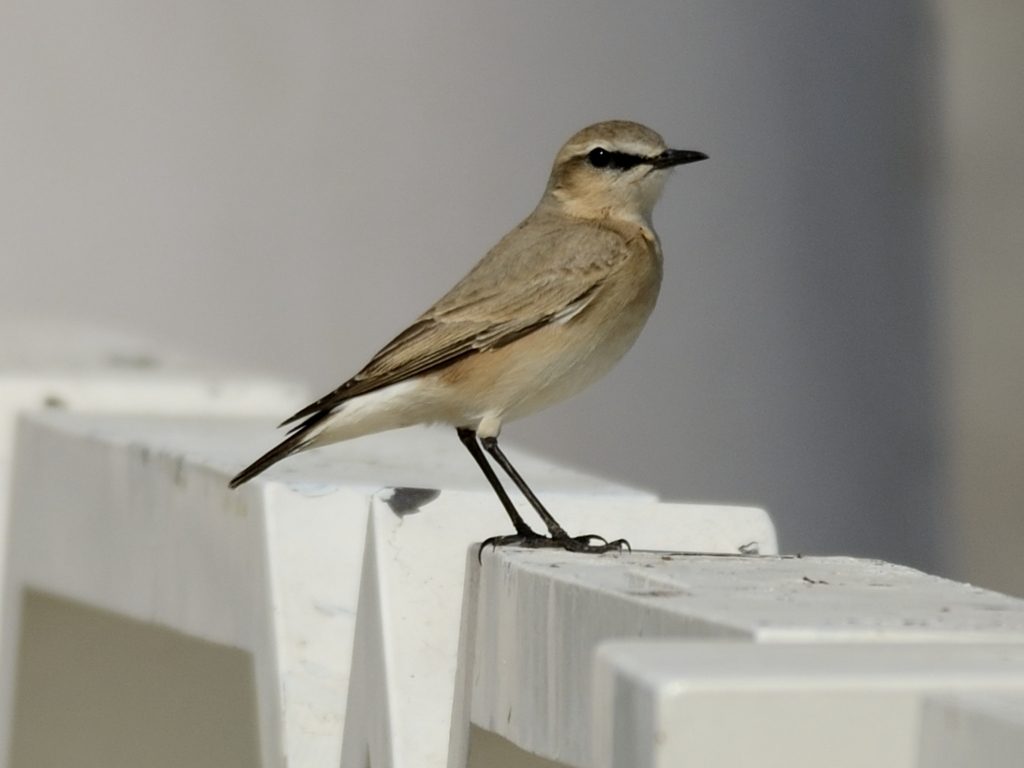
Photo: Noel Reynolds · CC BY 4.0 (May be cropped or resized)
Oenanthe isabellina
Rare visitor: recorded only occasionally in this country
Basic stats
Diet
Ants, grasshoppers, moths, flies, mites, spiders, insect larvae and some seeds
Habitat
Steppe, open and barren country, arid regions, high plateaux and lower hill slopes
Range
Breeds from southern Russia and Central Asia (including central Asia) to Iran and Arabia; winters in Africa and northwestern South Asia
Size
15–16.5cm
The isabelline wheatear is a small chat, 15–16.5 centimetres long, with sandy-brown upperparts tinged isabelline, a pale grey-yellow or fawn shade. The rump and upper tail-coverts are white and the brownish-black tail has a large white base, covering more than half the length of the outer feathers. A creamy over-eye streak and pale brown ear-coverts complete the face. It resembles a female northern wheatear but is larger, more upright and more tawny, with more black on the tail. (Wikipedia, general species account)
A migratory insect-eater of steppe and open country, it breeds from southern Russia, the Caspian region, the Kyzyl Kum Desert and central Asia to Afghanistan, Iran, Iraq, Saudi Arabia, Syria, Jordan and Israel, and winters in Africa and northwestern South Asia. It is active and restless, moving across the ground in long hops, bobbing, and flaring and flicking its tail. It forages mostly on the ground, probing the soil, and occasionally flutters up after flying insects. In winter quarters it is solitary. (Wikipedia, general species account)
Quick answers
- What does the Isabelline Wheatear eat?
- Ants, grasshoppers, moths, flies, mites, spiders, insect larvae and some seeds
- What habitat does the Isabelline Wheatear live in?
- Steppe, open and barren country, arid regions, high plateaux and lower hill slopes
- Where is the Isabelline Wheatear found?
- Breeds from southern Russia and Central Asia (including central Asia) to Iran and Arabia; winters in Africa and northwestern South Asia
- How big is the Isabelline Wheatear?
- 15–16.5cm