
 Wildlife
of Korea
Korean Salamander
Amphibians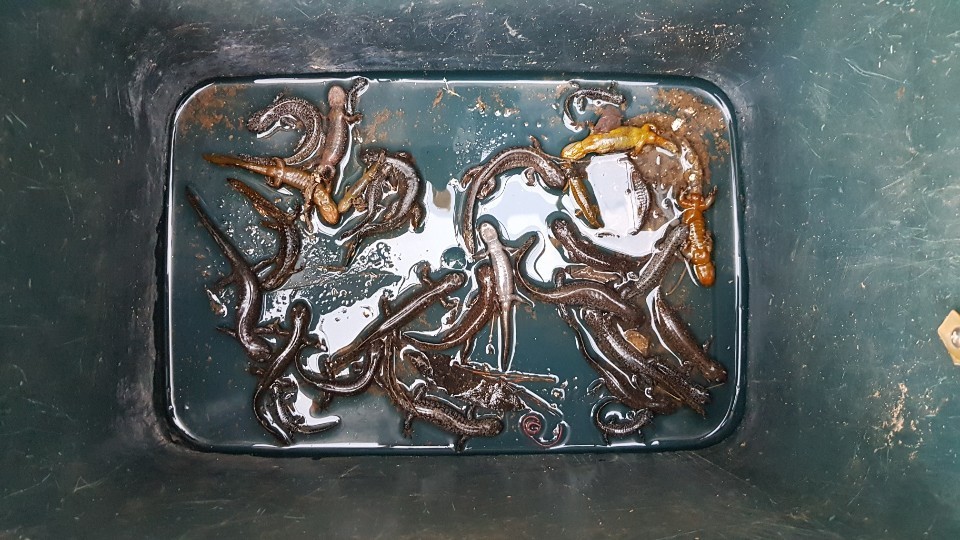
Photo: (c) Kim, Hyun-tae, some rights reserved (CC BY) · CC BY 4.0 (May be cropped or resized)
Hynobius leechii
Rare visitor: recorded only occasionally in this country
Basic stats
Habitat
Forested hills and freshwater breeding sites
Range
Korean Peninsula and northeastern China
The Korean, or Gensan, salamander is Hynobius leechii, described by Boulenger in 1887. It is widespread on the Korean Peninsula and recorded in northeastern China. Historical H. leechii included several genetically distinct Korean forms; later work recognized H. quelpaertensis, H. yangi and H. unisacculus separately. Modern identification must therefore use current range and genetic evidence (Amphibian Species of the World; Korean phylogeographic studies).
Korean salamanders occupy forested hills and reproduce in freshwater sites. Man-made drainage structures can trap migrating animals and cause mass mortality. Hidden diversity within the former broad species makes locality especially important: populations once labelled H. leechii may now belong to regional species. This profile avoids transferring measurements or breeding details across those lineages and follows current diagnostic work rather than the older broad concept alone (Amphibian Species of the World; South Korean mitochondrial study).
Quick answers
- What habitat does the Korean Salamander live in?
- Forested hills and freshwater breeding sites
- Where is the Korean Salamander found?
- Korean Peninsula and northeastern China