 Wildlife
of Korea
Russian Myotis
Mammals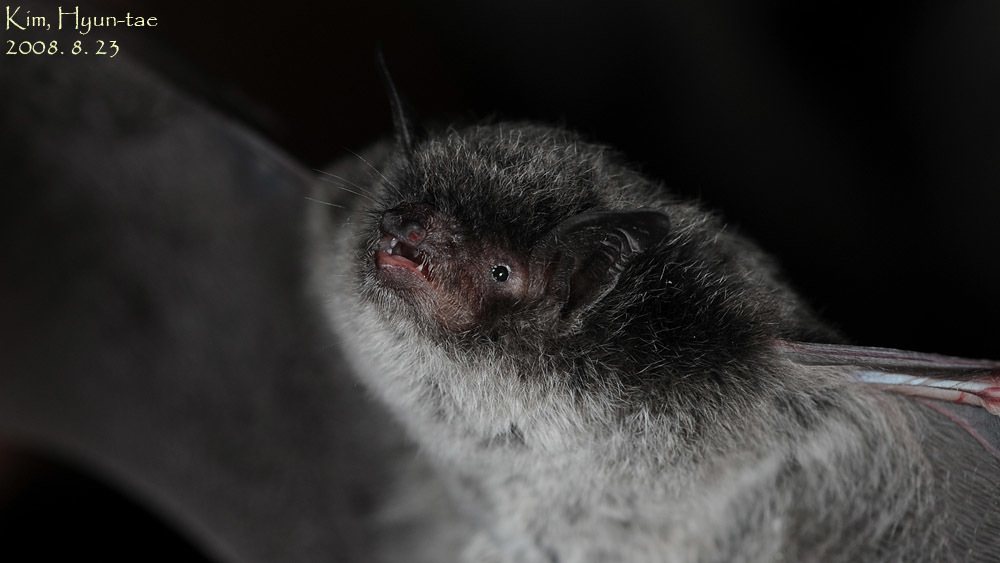
Photo: (c) Kim, Hyun-tae, some rights reserved (CC BY) · CC BY 4.0 (May be cropped or resized)
Myotis petax
Rare visitor: recorded only occasionally in this country
Basic stats
Diet
Small flying insects
Habitat
River valleys in forest
Range
Eastern Siberia and East Asia, including central Asia
Litter size
Usually 1; sometimes 2
Gestation period
50–55 days
Size
44–58mm
The eastern water bat, listed here as Russian myotis, is a small Myotis measuring 44–58mm, with a 34–39mm forearm. It has short dense dark-brown dorsal fur, a greyer to whitish underside, a broad bare muzzle, and comparatively large feet. Its tail is enclosed in the broad interfemoral membrane. It was long treated as an eastern subspecies of Daubenton's bat before being revalidated. (Yoshiyuki; Matveev et al. 2005, as summarized on Wikipedia)
It occupies forested river valleys from eastern Siberia through central Asia, northern China, Korea, and northern East Asia. Small flying insects, especially flies and moths, are taken mainly over water. Summer roosts include tree hollows, bridges, and buildings; females form colonies and usually produce one pup, occasionally two, after a reported 50–55-day gestation. Deep caves and abandoned mines commonly hold winter groups. (Smith and Xie 2008; Matveev et al. 2005, as summarized on Wikipedia)
Quick answers
- What does the Russian Myotis eat?
- Small flying insects
- What habitat does the Russian Myotis live in?
- River valleys in forest
- Where is the Russian Myotis found?
- Eastern Siberia and East Asia, including central Asia
- What is the litter size of the Russian Myotis?
- Usually 1; sometimes 2
- How long is the gestation period of the Russian Myotis?
- 50–55 days
- How big is the Russian Myotis?
- 44–58mm