 Wildlife
of Korea
Coypu
Mammals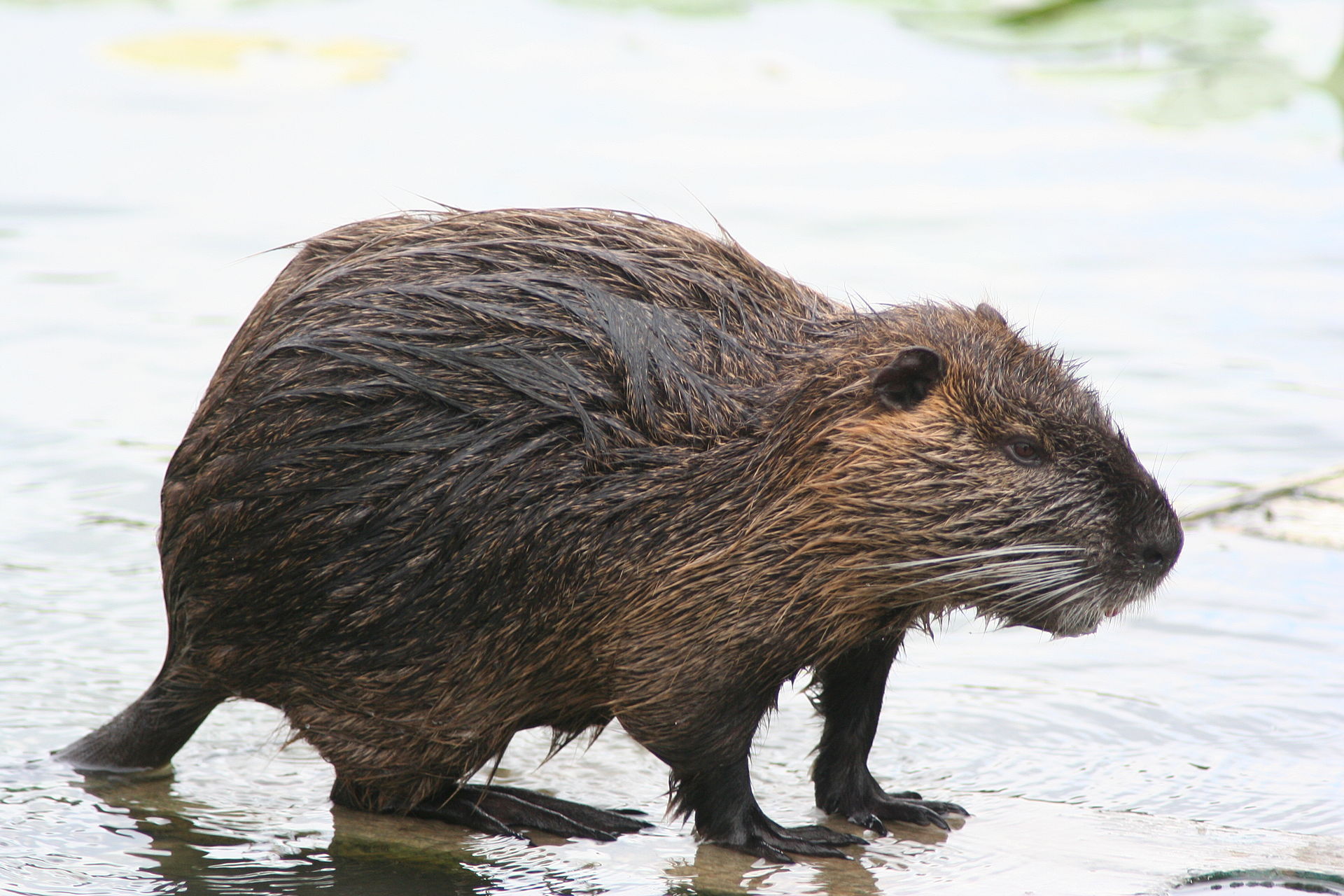
Photo: Philippe Amelant · CC BY-SA 3.0 (May be cropped or resized)
Myocastor coypus
Rare visitor: recorded only occasionally in this country
Basic stats
Diet
Aquatic vegetation, including stems, leaves, roots and bark
Habitat
Marshes, lake margins and slow streams
Range
Native to southern South America; introduced in Asia and elsewhere
Litter size
Usually 3–6; recorded range 1–13
Gestation period
127–139 days
Size
Usually 80–90cm total length
Weight
Usually 8–10kg
The coypu, or nutria, is a large semiaquatic rodent with a robust body, short legs, orange incisors and a long round scaly tail. The hind feet are partly webbed, unlike a beaver's fully webbed feet. Typical total length is 80–90 cm and weight 8–10 kg. Native to southern South America, it now has feral populations in Asia, Europe and North America after escapes and releases from fur farms (Texas Tech species account; Animal Diversity Web).
Coypus inhabit marshes, lake edges and slow streams with abundant emergent vegetation. They are chiefly nocturnal herbivores, eating aquatic stems, leaves, roots and bark, and they build bank burrows and feeding platforms. Breeding can occur year-round; gestation lasts 127–139 days and litters usually contain three to six young. Their burrowing can weaken banks and dikes, while heavy grazing damages wetlands. Korean occurrence represents an introduced population rather than the native range (Animal Diversity Web; USGS species profile).
Quick answers
- What does the Coypu eat?
- Aquatic vegetation, including stems, leaves, roots and bark
- What habitat does the Coypu live in?
- Marshes, lake margins and slow streams
- Where is the Coypu found?
- Native to southern South America; introduced in Asia and elsewhere
- What is the litter size of the Coypu?
- Usually 3–6; recorded range 1–13
- How long is the gestation period of the Coypu?
- 127–139 days
- How big is the Coypu?
- Usually 80–90cm total length
- How much does the Coypu weigh?
- Usually 8–10kg