 Wildlife
of Korea
Siberian Flying Squirrel
Mammals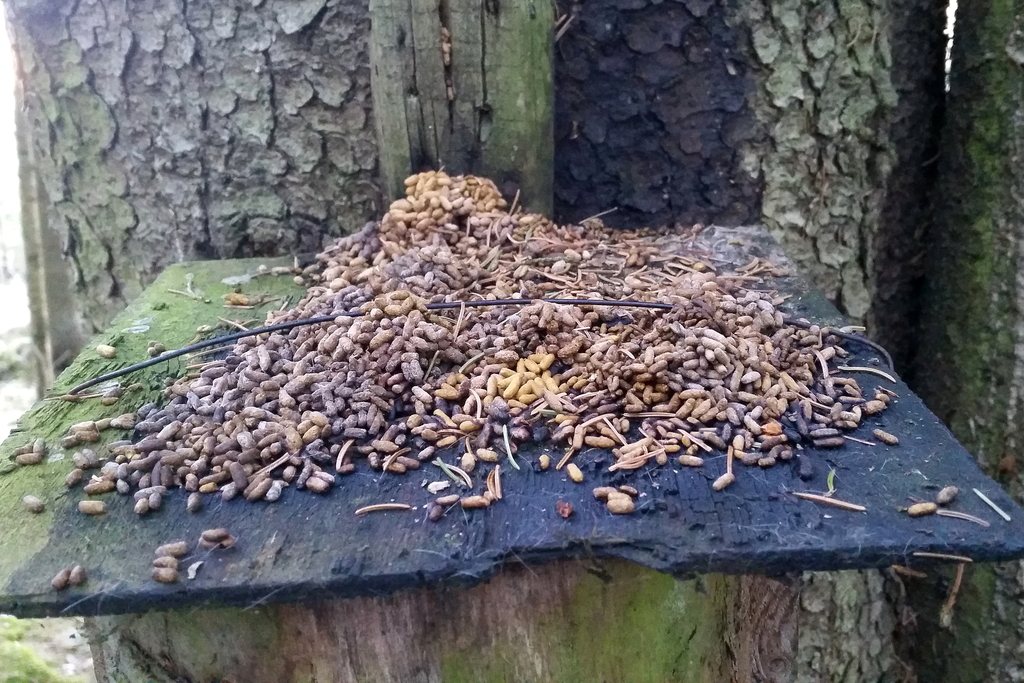
Photo: (c) Mikael Nyman, some rights reserved (CC BY) · CC BY 4.0 (May be cropped or resized)
Pteromys volans
Rare visitor: recorded only occasionally in this country
Basic stats
Diet
Leaves, buds, catkins, seeds and berries
Habitat
Mature boreal and mixed forest
Range
Northern Europe through Russia to Korea and Japan
The Siberian flying squirrel is a small arboreal rodent with very large dark eyes, soft grey fur and a broad, flattened tail. A furred membrane stretches between each wrist and ankle; when the limbs spread, this becomes a gliding surface rather than a true wing. The underside is pale, the face lacks a chipmunk's bold stripes, and short rounded ears and a compact head reduce drag between trees (Wikipedia, Siberian flying squirrel account).
This squirrel occupies mature boreal and mixed forest, rests in tree cavities and is active mainly after dusk. It glides from trunk to trunk rather than routinely descending to the ground. Leaves, buds, catkins, seeds and berries make up much of its diet, and food may be stored in cavities. Females rear their young in lined nest holes (Wikipedia, Siberian flying squirrel account). Its Asian distribution includes North and South Korea (Mammal Diversity Database v2.4).
Quick answers
- What does the Siberian Flying Squirrel eat?
- Leaves, buds, catkins, seeds and berries
- What habitat does the Siberian Flying Squirrel live in?
- Mature boreal and mixed forest
- Where is the Siberian Flying Squirrel found?
- Northern Europe through Russia to Korea and Japan